Repair Protect
Preserve
From a simple filling to a full ceramic crown, restorative dentistry returns damaged teeth to full function and natural beauty — using materials matched precisely to your tooth's color, shape, and strength requirements.
Restorative dentistry addresses teeth that have been damaged by decay, fracture, or wear rebuilding them with materials that look and feel completely natural. At the same time, our preventive therapies protect healthy enamel so future damage never happens in the first place.
Crowns, Onlays & Inlays
Strength
Beautifully Restored
When a tooth has lost too much structure for a filling to reliably hold due to decay, a crack, or a large existing restoration a ceramic crown, onlay, or inlay provides a durable, precisely fitted restoration that protects what remains. All are fabricated from high strength dental ceramic for a seamless, natural result that is virtually indistinguishable from the original tooth.
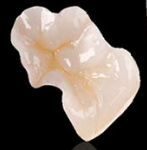
Inlay
Conservative Option
A custom-fitted ceramic restoration that fits within the cusps of the tooth ideal when damage is confined to the central biting surface. Preserves more natural tooth structure than a full crown.
Best For
Moderate decay or fracture within the cusp tips. No cusp replacement needed.
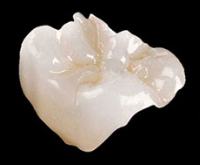
Onlay
Moderate Coverage
Covers one or more cusps while leaving healthy tooth structure intact. The ideal middle ground more protection than an inlay, less reduction than a crown. Sometimes called a "partial crown."
Best For
Larger restorations where cusps are involved but full crown coverage is not yet necessary.
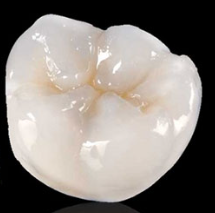
Crown
Full Coverage
Encases the entire visible portion of the tooth above the gumline. Used when the tooth is significantly compromised after a root canal, large fracture, or extensive decay. Full protection against future breakage.
Best For
Root-canal-treated teeth, cracked teeth, or teeth with minimal remaining healthy structure.
01
Preparation Visit
Tooth shaped, digital scan taken, shade matched. Temporary restoration placed while permanent piece is fabricated.
~60–90 min
02
Lab Fabrication
Custom ceramic restoration crafted by a dental lab using your digital scan. Turnaround:
~1 week
03
Delivery Visit
Temporary removed, permanent restoration tried in, adjusted, and bonded. Bite checked and refined.
~45–60 min
04
follow up
Optional check at 1–2 weeks to confirm fit, comfort, and bite feel are optimal.
Ceramic Bridge Restorations
Bridge the
Gap
A dental bridge replaces one or more missing teeth by anchoring a ceramic pontic (false tooth) to the prepared natural teeth on either side of the gap. The result is a fixed, non-removable restoration that restores your bite, prevents neighboring teeth from drifting, and blends naturally with your smile. All bridges are fabricated from full-ceramic material for optimal aesthetics and biocompatibility.

How a Bridge Works
The two teeth flanking the gap (called abutment teeth) are shaped to accept ceramic crowns. A single unit is fabricated that includes those crowns fused to the replacement tooth in between the span "bridges" the space. Once cemented in place, the bridge is permanent and functions like natural teeth.
- Fixed — does not come in or out
- Replaces 1–3 consecutive missing teeth
- No surgery required
- Full ceramic no metal framework visible

Your Treatment Path
The process mirrors a crown in two visits. At the first appointment, both abutment teeth are prepared, a digital impression is taken, and temporaries are placed. At the second visit approximately 1–2 weeks later, the final bridge is delivered, adjusted, and permanently bonded.
- Visit 1 — preparation & impressions: ~90 min
- Temporary bridge worn for 1–2 weeks
- Visit 2 — delivery & cementation: ~60 min
- Total timeline: 2–3 weeks
⚑ Implant vs. Bridge? A bridge is a reliable and surgical-free option for replacing missing teeth. However, a dental implant preserves the jawbone and doesn't require shaping neighboring teeth. We'll discuss both options and recommend what makes the most sense for your specific case.
Tooth-Colored Fillings
Fixed
Invisible
Composite resin fillings restore teeth affected by cavities, minor fractures, or old metal restorations that need replacement using a tooth-colored material that bonds directly to the tooth structure. The result is strong, natural-looking, and completed in a single appointment. We do not place amalgam (silver) fillings all restorations are toothcolored.
The Procedure
The affected area is numbed with local anesthetic. Decay or damaged material is carefully removed, and the tooth surface is conditioned for bonding. The composite resin is applied in layers, each hardened with a curing light, then shaped and polished to match the surrounding tooth contour and bite. The entire process is completed in one visit.
What to Expect
Most fillings take 30–60 minutes per tooth. Multiple teeth can often be treated in the same appointment. Some mild sensitivity is normal for a few days after placement. Composite fillings are durable and long-lasting when properly placed and maintained, though they may eventually need replacement over time as they wear.
01
Diagnosis
X-rays and clinical exam identify decay. Size and depth determine whether a filling or larger restoration is appropriate.
~60–90 min
02
Anesthetic
Local anesthetic administered. Area fully numb before any preparation begins.
~1 week
03
Restoration
Decay removed, composite placed in layers, cured, shaped, and polished.
~45–60 min
04
Bite Check
Bite paper used to confirm even occlusion. Any high spots adjusted immediately before you leave.
Fluoride Treatments
Armor for
Your Enamel
Professional fluoride treatments deliver a concentrated dose of fluoride directly to the tooth surfaces — far stronger than what's found in toothpaste. Fluoride integrates into the enamel crystal structure, making it significantly more resistant to acid attack from bacteria and diet. It can also reverse the earliest stage of cavity formation before a cavity develops, making it one of the most cost-effective preventive measures available.
How It Works
A high-concentration fluoride varnish is painted onto all tooth surfaces at the end of your cleaning appointment. It sets on contact and continues releasing fluoride into the enamel for several hours. The application takes just a few minutes and requires no separate appointment.
Who Benefits Most
Recommended for patients with active cavities or a high decay history, dry mouth, exposed root surfaces, orthodontic hardware, acid reflux, high-sugar diets, or early white spot lesions. Also routinely recommended for children and teens during development.

Frequency
Applied at every cleaning visit, every 6 months for standard patients, every 3–4 months for high risk patients. Post-treatment: avoid eating, drinking, or rinsing for 30 minutes to allow maximum uptake into the enamel.
Enamel Remineralization
Rebuild
What Was Lost
Enamel is constantly losing and regaining minerals through the daily cycle of acid attack and remineralization. When the balance tips toward demineralization, due to diet, dry mouth, acid reflux, or poor oral hygiene, enamel weakens and early lesions form. Targeted remineralization therapy tips the balance back, helping the enamel repair and reharden before damage becomes irreversible.
Professional Application
Prescription-strength remineralizing agents — including concentrated fluoride varnishes, calcium phosphate (CPP-ACP) pastes such as MI Paste, and silver diamine fluoride are applied in-office to areas showing early demineralization. Protocols are tailored to each patient's risk level and lesion type.
Take-Home Protocols
In-office treatment is paired with a customized home care routine which may include prescription fluoride toothpaste or gel, remineralizing mousse, and dietary and hydration guidance. Consistency between professional visits and home use is what drives meaningful results.
Monitoring Progress
Lesion response is monitored at each subsequent visit using clinical photos and diagnostic tools. In many cases, white spot lesions visibly fade and X-ray lesions stabilize or reverse. Remineralization is most effective when initiated early before cavitation occurs.
Who This is for
Patients with visible white spot lesions (early decay or post-orthodontic marks), high cavity risk, acid erosion from reflux or frequent citrus/soda intake, dry mouth from medications or systemic conditions, or anyone who wants to proactively protect their enamel. Especially valuable during orthodontic treatment.
Time & Expectations
Remineralization is a gradual biological process. Meaningful improvement is typically seen over 3–6 months of consistent therapy. Lesions may not disappear entirely, but the goal is to stabilize them stopping progression and restoring mineral density. Ongoing maintenance keeps enamel in its best possible condition.
Resin Infiltration
Stop Cavities
Before They Start
Resin infiltration is a minimally invasive technique that treats very early stage cavities ones that have not yet broken through the enamel surface. Rather than drilling, a low viscosity resin is applied to the affected area, where it penetrates and fills the microscopic porous channels created by acid demineralization. The resin hardens in place, essentially sealing the lesion and halting its progression without removing any tooth structure.
The Procedure
The tooth surface is prepared with a mild etching gel to open the pores of the enamel lesion. The infiltrant resin is applied and allowed to penetrate for 3 minutes, then excess is removed and the resin is cured with a light. The process may be repeated once to ensure complete infiltration. No drilling, no anesthetic, no discomfort.
- No drilling or anesthetic required
- Preserves 100% of natural tooth structure
- Can also improve appearance of white spot lesions
- Approved for both interproximal and smooth surface lesions
Is My Cavity a Candidate?
Resin infiltration is indicated for non-cavitated lesions early decay that is visible on X-ray or as a white spot but has not yet formed a physical hole in the enamel. Once a cavity has broken through the surface, a conventional filling is needed. Catching lesions early at regular check-ups is what makes this option possible.
- 1 visit same day as diagnosis in most cases
- Appointment duration: 30–45 minutes per site
- No recovery resume normal activity immediately
- Regular monitoring at subsequent check-ups
"Resin infiltration lets us treat a cavity without drilling, intercepting disease at the earliest stage and preserving tooth structure that can never be replaced once it's gone."
Interested in our services? We’re here to help!
We want to know your needs exactly so that we can provide the perfect solution. Let us know what you want and we’ll do our best to help.

